Are you trying to decide where your POD business should live in 2026?
Etsy and Amazon are two giants. Both attract millions of buyers every day. Etsy feels creative and niche-driven. Amazon feels fast, massive, and highly competitive.
In this guide, we’ll analyze the differences between Etsy vs Amazon print on demand services. You’ll see the pros, the cons, and which platform makes more sense depending on your goals, budget, and growth plans for 2026.
Etsy vs Amazon Print on Demand: Quick Overview
Here's a quick comparison so that you can see which one might fit better for you:
| Platform | Focus On | Best For |
|---|---|---|
| Etsy | Handmade, creative, personalized, and niche products | Artisans, creatives, & small-scale sellers want to sell unique designs. |
| Amazon | High-volume sales, efficiency, and mass-market products | Sellers who want to scale fast, reach a huge audience, & focus on sales volume |
What Is Etsy?
Etsy is an online marketplace for selling handmade items, vintage products, craft supplies, and creative goods. It attracts shoppers who are specifically looking for unique, personalized, and artistic products rather than mass-produced items.
For print-on-demand sellers, Etsy is a natural fit. This channel is also beginner-friendly. You can open a shop quickly without complicated approvals, and there’s no monthly subscription required.
However, success on Etsy often depends on understanding its niche audience and adapting to its search algorithm.
🔔Learn more: Dropshipping vs POD: Which Is Better? (2026 Edition)
Pros
✅Easy setup for beginners - Opening an Etsy shop is simple and doesn’t require technical skills or approval processes.
✅Low upfront costs - There’s no monthly fee. You only pay small listing, transaction, and payment processing fees.
✅Strong niche audience - Etsy shoppers actively search for handmade, creative, and personalized products.
✅Built-in advertising options - Etsy Ads help boost listing visibility within the marketplace.
✅Supportive seller community - Etsy offers forums and a help center for guidance and troubleshooting.
Cons
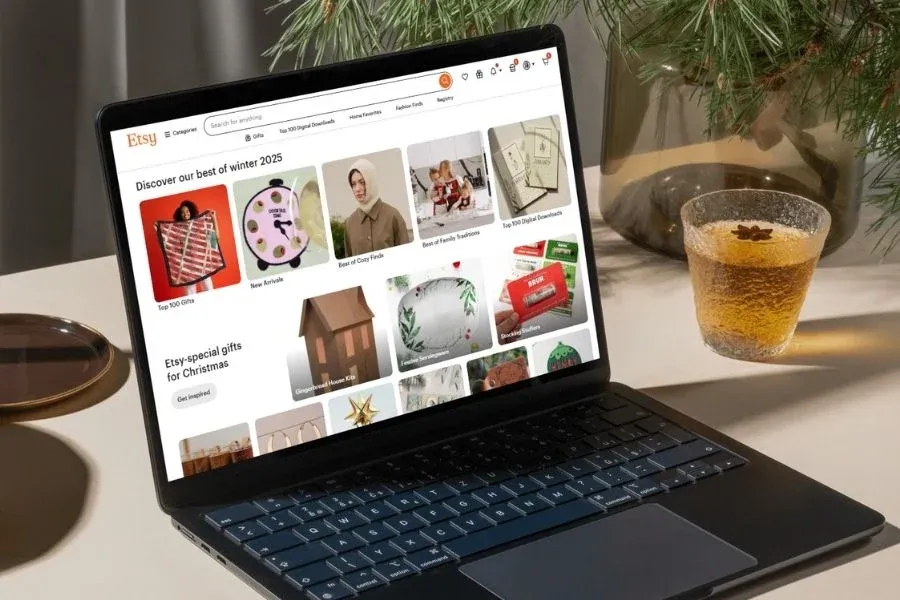
❌Multiple Etsy fees add up - Listing fees, transaction fees, and payment processing costs can impact margins over time.
❌High competition in popular niches - Categories such as POD apparel and gifts are crowded, making it more challenging to stand out.
❌Limited scalability - Etsy’s audience is smaller than Amazon’s, which can restrict long-term growth.
❌Algorithm dependence - Visibility relies heavily on Etsy’s search algorithm, which can change unexpectedly.
❌Stricter product rules - Etsy is more restrictive about mass-produced items compared to Amazon.
What Is Amazon?
In 2025, Amazon holds approximately 37.6% of the U.S. e-commerce market, making it the top platform for sellers seeking volume and rapid growth.
Unlike Etsy, which focuses on handmade and creative products, Amazon emphasizes efficiency and variety. This makes it a strong choice for POD sellers who aim to reach a broad audience and sell at scale.
Expert tips on boosting sales on Amazon: What is the Amazon Buy Box? Tips to Win It 🎉
Pros
✅Massive customer base - Amazon attracts millions of active buyers worldwide, giving your products instant reach.
✅High sales potential - Popular products can move quickly thanks to Amazon’s traffic and buying intent.
✅Easy scaling - Amazon provides tools, reports, and automation features designed for growing businesses.
✅Fulfillment by Amazon (FBA) - Amazon can handle storage, shipping, returns, and customer service for you.
✅Strong customer trust - Buyers trust Amazon’s delivery speed and return policies, which can boost conversions.
✅Amazon Handmade option - Handmade sellers can apply to Amazon Handmade for better visibility in that niche.
Cons
❌More complex setup - Opening a seller account requires providing business details, tax information, and passing compliance checks.
❌Higher fees - Referral fees vary by category and can cut into profit margins.
❌Monthly subscription cost - A Professional seller account costs $39.99 per month.
❌Intense competition - You’ll compete with other sellers, private labels, and even Amazon itself.
❌Limited branding - Amazon prioritizes product listings over brand identity, making differentiation harder.
❌Category restrictions - Some product categories require approval, which can slow down new sellers.
Differences Between Amazon and Etsy

The biggest differences come down to fees, fulfillment, product rules, and the type of customers you reach. Understanding these points will help you choose the right platform.
Seller Fees
🟢Etsy uses a straightforward, pay-as-you-go model:
- Listing fee: $0.20 per item, renewed every 4 months
- Transaction fee: 6.5% of the total order value (item + shipping)
- Payment processing: Varies by country (US: 3% + $0.25 per order)
- Optional ads: Etsy Ads & Etsy Offsite Ads (optional)
🟢Amazon’s fee structure is more complex and better suited for volume sellers.
- Professional plan: $39.99/month (recommended for serious sellers)
- Individual plan: $0.99 per item sold (no monthly fee)
- Referral fees: Percentage per sale (varies by category)
- FBA fees: Extra costs for storage, packing, & shipping (if using FBA)
Fulfillment Methods
🟧On Etsy, sellers usually handle fulfillment themselves or work with print-on-demand providers.
🟧Amazon offers more flexibility when it comes to fulfillment. Like Etsy, you can fulfill orders yourself or use third-party print-on-demand services. In addition, Amazon provides Fulfillment by Amazon (FBA).
With FBA, you send your inventory to Amazon’s warehouses, and Amazon handles storage, packing, shipping, customer service, and returns.
Product Types
🔵Etsy focuses on creative, handmade, and personalized products. The platform is ideal for sellers who offer unique designs or customized print-on-demand items. Popular product types on Etsy include custom T-shirts, mugs, posters, wedding stationery, wall art, phone cases, and digital downloads.
🔵Amazon supports a much wider range of product types, from everyday essentials to high-volume consumer goods. For print-on-demand sellers, Amazon works best for standardized products that appeal to a broad audience, such as basic apparel, notebooks, drinkware, and home accessories.
Customer Base
🔶Etsy attracts a smaller, niche audience that actively looks for handmade, creative, and personalized products. Shoppers often care about the story behind the item, the maker, and the uniqueness of the design.
🔶On the other hand, Amazon serves a massive global audience with hundreds of millions of active shoppers. Customers here are usually less interested in the seller’s story and more focused on price, speed, reviews, and convenience.
Etsy vs Amazon Print on Demand: Which is Better?
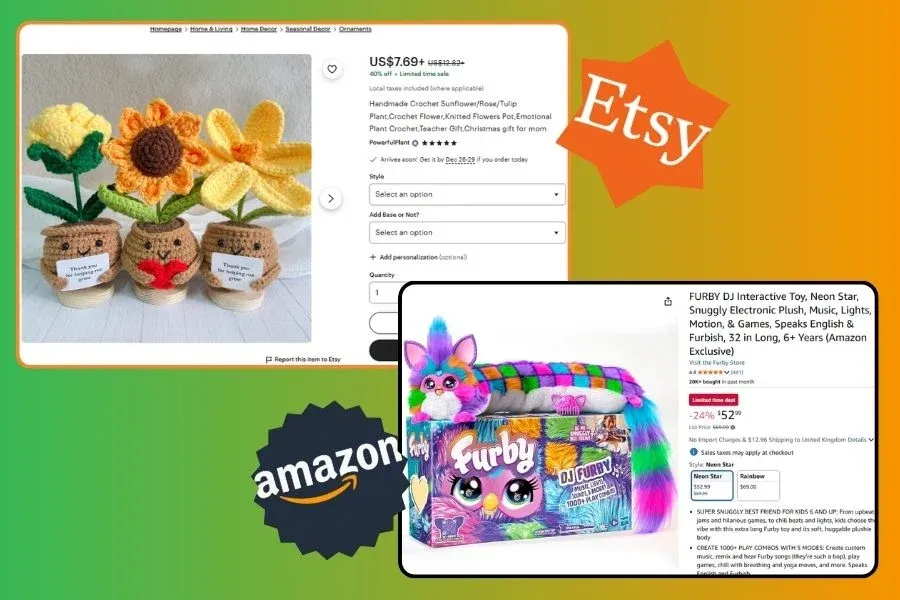
There’s no one-size-fits-all answer here. Etsy vs Amazon print on demand really depends on your goals, products, and how you want to grow your business. To make it easier to decide, here’s a quick side-by-side summary.
| Feature | Etsy | Amazon |
|---|---|---|
| Main focus | Handmade, creative, personalized products | Mass-market products, speed, & convenience |
| Best for | Artists, designers, niche POD brands | Sellers aiming for high volume and fast scaling |
| Audience size | Smaller but highly targeted | Massive global customer base |
| Brand building | Strong personal brand & storytelling | Limited branding, platform-first |
| Competition | Niche-focused, easier to stand out | Very competitive in most categories |
| Fees | Lower upfront, simple structure | Higher fees, more complex |
| Fulfillment options | Self-fulfillment or POD partners | Self-fulfillment, POD partners, or FBA |
| Growth potential | Steady, niche-based growth | Rapid scaling with the right products |
For support, you can reach Etsy Help Center (for Etsy) or Seller Center (for Amazon).
Don’t fall behind the trends: POD Trends 2026: What’s Next for Print-on-Demand Sellers 🌟
Tips to Manage Your Business Effectively on Etsy, Amazon, & Other Platforms
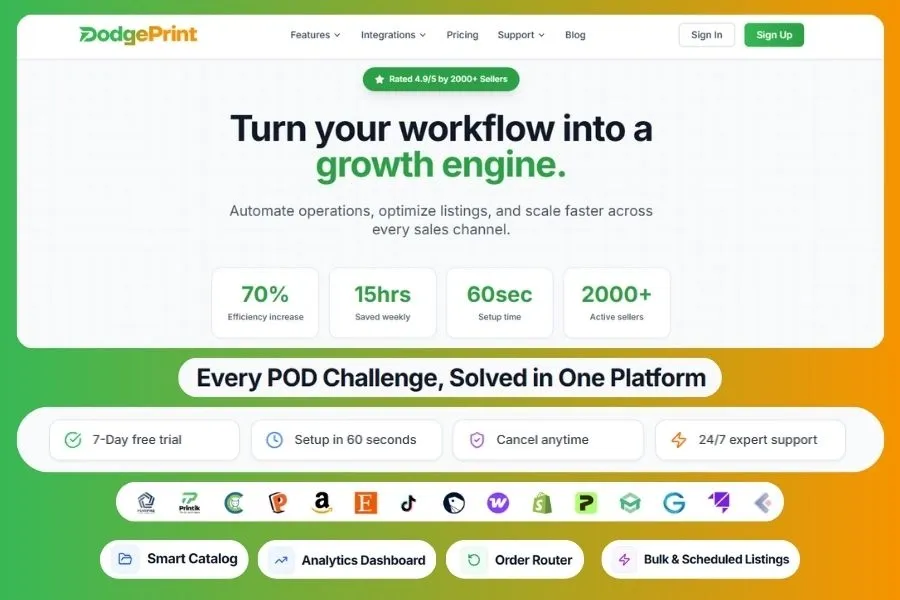
Running a print-on-demand business across Etsy, Amazon, and other marketplaces can get messy quickly. Different dashboards, separate orders, duplicated listings, and scattered data - all of them will slow sellers.
That’s why smart sellers rely on an all-in-one POD management tool like DodgePrint. Key ways DodgePrint helps you stay efficient:
- Bulk & scheduled listings to launch products faster without repetitive manual work
- Order management in one place, so you never miss or delay a fulfillment
- Smart catalog & mockup management to keep designs organized as your product line grows
- Multi-provider fulfillment routing, ensuring each order goes to the right supplier
- Centralized analytics to track sales, costs, and performance across all stores in real time
The result? Less admin work, fewer mistakes, and more time to focus on designs, marketing, and growth.
💸 Bonus: DodgePrint offers a free plan so new sellers can confidently start a POD business.

FAQs about Etsy vs Amazon Print on Demand
Can I Sell on Both Amazon and Etsy?
Yes. Many sellers use both platforms to reach different audiences. Etsy works well for niche and personalized products, while Amazon helps scale sales faster with a larger customer base.
Selling on Etsy vs Amazon: Which Is Cheaper?
Etsy is usually cheaper to start because there’s no monthly fee and lower upfront costs. Amazon can be more expensive due to monthly subscriptions and referral fees, but it may generate higher volume sales.
Does Amazon Handmade Charge A Fee?
You must have a Professional seller account, costing $39.99/month. If you’re approved to sell on Amazon Handmade, the platform will waive this fee after the first month. Amazon also charges a 15% referral fee on every order.
To Wrap Up
Etsy vs Amazon print on demand - The best platform depends on your goals. If you want a personal connection with buyers, Etsy may be a better fit. If your priority is reaching customers worldwide, Amazon offers unmatched potential. Many successful sellers sell on both platforms to strike a balance between creativity and scale.