If you’re starting an online business in 2026, you’ll likely compare 2 of the most popular models: Dropshipping vs POD (Print on Demand). Both allow you to sell products online without holding inventory, but they work very differently.
The model you choose will shape your brand, profits, and long-term success. This guide breaks down what dropshipping is, what POD is, and the key differences to help you make the best decision.
What Is Dropshipping?
Dropshipping is a simple online business model where you sell products without ever holding inventory. Instead of buying stock upfront, you only purchase an item from a supplier after a customer places an order.
The supplier then ships the product directly to the buyer. This makes dropshipping a low-risk, beginner-friendly way to start an eCommerce business with minimal investment.
📌How Dropshipping Works:
- You list products in your online store (Shopify, Etsy, WooCommerce, etc.).
- A customer places an order and pays you first.
- You forward the order details to your dropshipping supplier.
- The supplier prepares, packs, and ships the product directly to your customer.
- You keep the price difference as profit.
What Is Print on Demand?
Print on Demand (POD) is a type of dropshipping business model where you sell custom-designed products, such as t-shirts, mugs, or phone cases. You also don’t need to keep any inventory. You only create a product after a customer places an order.
The printing partner handles production, packaging, and shipping on your behalf. POD is popular among artists, designers, and creators. You can turn your ideas into products with almost no upfront cost.
POD gives you complete creative freedom without dealing with inventory, bulk orders, or manufacturing.
📌How Print on Demand Works:
- You upload your design to a POD platform or integrate it with your online store.
- A customer places an order for a product featuring your design.
- Your POD supplier prints the item after the order comes in.
- They pack and ship the product directly to the customer under your store’s name.
- You earn the profit (selling price minus production cost).
📌Start Your POD Business with DodgePrint
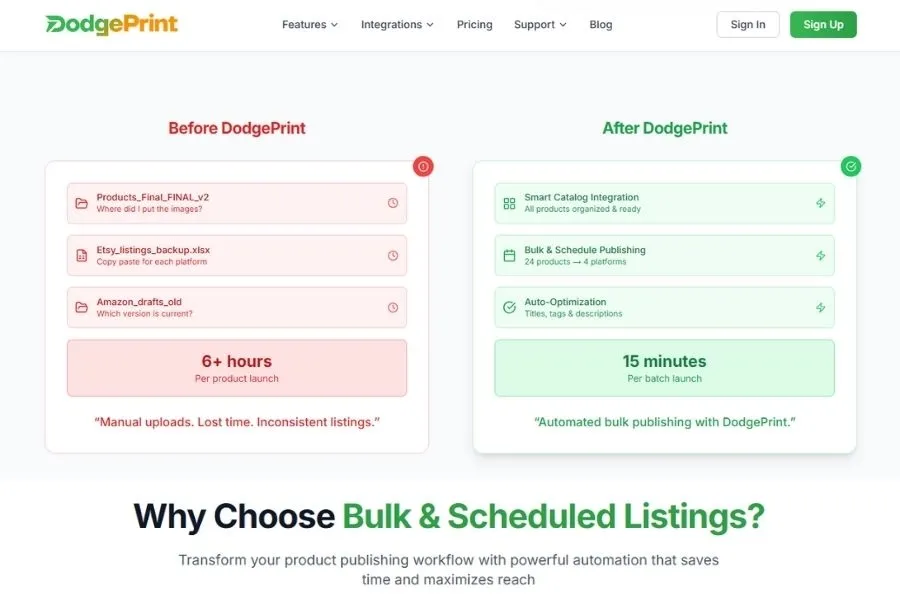
If you’re excited to start a POD business, DodgePrint is the perfect place to begin. It doesn’t just simplify your setup. It helps you grow and expand without stress.
Consider this: Managing one Etsy shop can be alright. But when you try to manage multiple Etsy stores or sell across different platforms at the same time, things can get chaotic fast.
Files get messy, listings get duplicated, and keeping track of orders becomes overwhelming. 👉That’s exactly why DodgePrint exists.
Instead of juggling dozens of tools, DodgePrint brings everything into one clean, beginner-friendly dashboard.
You can organize all your designs tidily and publish listings everywhere (Printify, Etsy, BurgerPrints, etc.) with just a few clicks. You can also track every single order from all your sales channels in one spot. No confusion. No stress.
Plus, the real-time analytics and AI optimization help you understand what’s working, what’s selling, and what to improve.
With DodgePrint:
- You spend less time on repetitive tasks
- More time creating designs & building the POD brand you’ve always imagined.
Start simple. Scale smart. And let DodgePrint make your POD journey easier from day one. 🎯
⚠️You may like: 5 Best POD Management Software 2026 You Must Try
Dropshipping vs POD: Similarities
Both models are low-risk and beginner-friendly, making them popular choices for new online entrepreneurs.
Here are the key similarities:
- No Inventory Required: You don’t have to buy stock upfront.
- Low Startup Costs: Both models remove the need for large investments, warehouses, or expensive equipment.
- Easy to Start: You don't need technical skills to begin these business models.
- Scale Easily: As orders grow, suppliers handle most of the workload. You can scale without hiring a big team.
- Wide Product Variety: Both models allow you to offer many product types to sell.
- Work From Anywhere: You can run the entire business from anywhere as long as you have a laptop and internet.
Differences Between Dropshipping vs POD
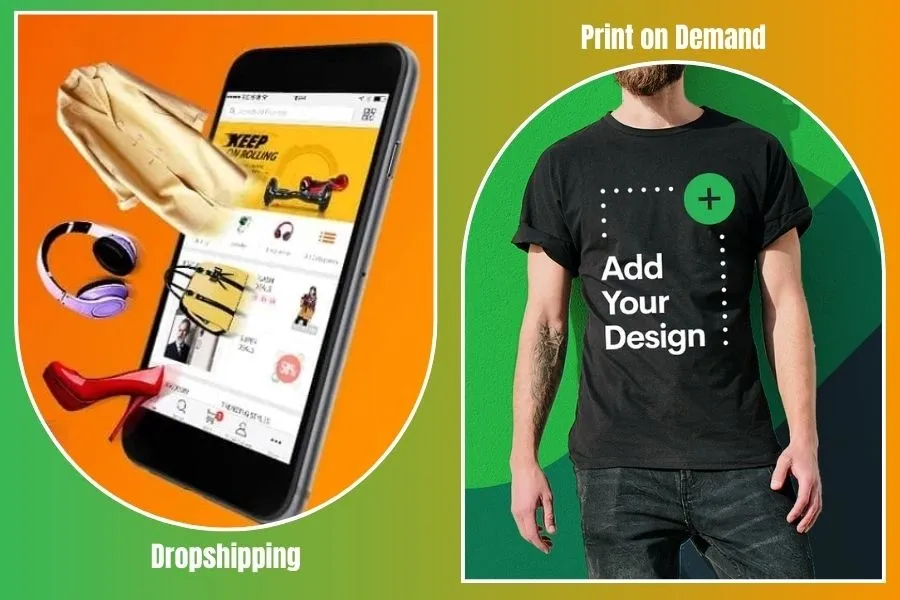
Both dropshipping and POD follow a similar foundation: You only produce or ship products after a customer places an order. No inventory. No upfront stock. No warehouse.
However, the way products are created, customized, and fulfilled is very different. Those differences affect your profit margins, branding, workload, and long-term scalability.
Startup Difficulty
🟧Print on Demand
POD is generally easier for beginners because the setup is quick, and you don’t pay for products until someone orders. The hardest part is choosing reliable print-on-demand providers.
Once your store is ready, your success mainly depends on your designs, niche, and marketing.
🟧Dropshipping
Dropshipping can also be beginner-friendly, but the difficulty depends on the tools you use.
If you use platforms like AliExpress, you’ll need to place each order manually - fine at first, but frustrating when sales increase. Tools such as DSers or Spocket can automate fulfillment, but they require a paid plan.
Competition Level
🟧Print on Demand
POD has less competition because you’re selling unique, custom-designed products instead of the same generic items. When your designs target a specific niche, you stand out even more and avoid direct price wars.
🟧Dropshipping
Dropshipping is far more competitive because many sellers use the same suppliers, sell the same products, and rely on similar pricing. This makes it harder to stand out unless you find an underserved niche or offer extremely competitive prices.
Product Customization
🟧Print on Demand
Product customization is the biggest strength of POD. You can turn your own artwork, quotes, or graphics into unique products that no one else is selling. This gives your brand a real creative edge.
🟧Dropshipping
Dropshipping offers far less customization. Most sellers use generic, pre-made products unless they work with a private-label supplier. This costs more and requires higher order volumes.
Since you can’t change the product itself, standing out depends heavily on strong marketing, competitive pricing, and choosing high-demand items to attract customers.
Branding Control
🟧Print on Demand
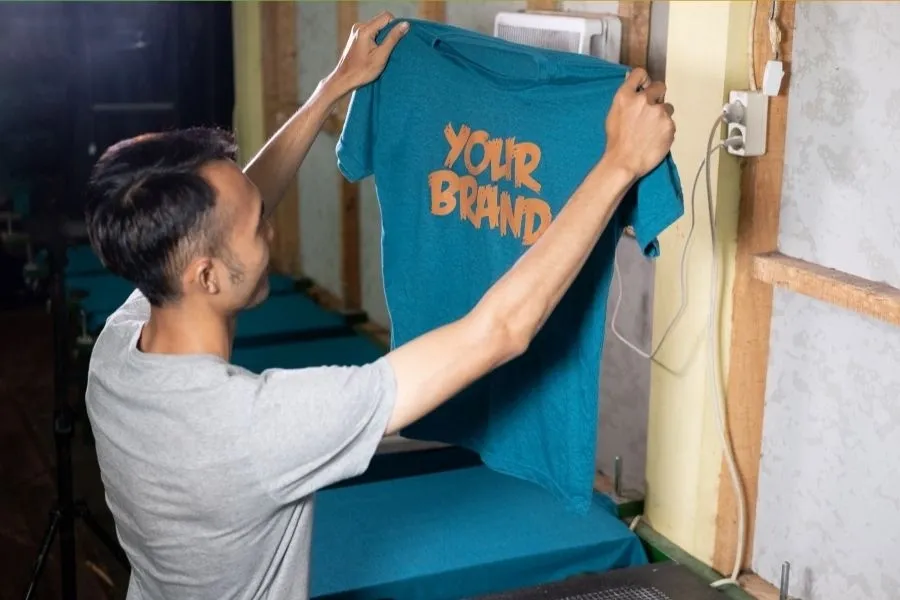
POD gives sellers much more control over branding. Many POD providers let you add custom touches such as branded packaging, neck labels, or pack-ins.
These details strengthen your brand identity and make your shop feel more professional and trustworthy.
🟧Dropshipping
Dropshipping offers limited branding control since most products are pre-made and shipped directly from suppliers. This model is usually better for sellers focused on speed and selling trending items.
Still, you can develop a strong brand with dropshipping. You can rely more on your website design, product selection, and customer service.
Inventory & Fulfillment
🟧Print on Demand
POD products are made only after a customer places an order, so fulfillment takes slightly longer. Most POD platforms show each provider’s average production time, helping you set clear expectations before customers buy.
🟧Dropshipping
Dropshipping products are pre-made and ready to ship, so fulfillment is generally faster than POD. However, you still rely on third-party suppliers, and inventory can change without warning.
Costs to Start
🟧Print on Demand
Your primary cost is the printing fee, which depends on product type, print method, and any add-ons like custom packaging.
Some POD platforms (like Printify) also offer bulk order discounts, helping sellers improve profit margins on best-selling designs.
🟧Dropshipping
With dropshipping, you pay the wholesale price for every product sold. Depending on the supplier platform, you may also pay extra for catalog access, automation tools, or subscription plans that streamline fulfillment.
Shipping Time
🟧Print on Demand
Shipping times vary depending on the provider, carrier, and destination. With POD platforms like Printify, you can choose providers located closest to your customers to reduce delivery times.
You will get clear shipping rates and estimated delivery windows upfront. Thus, you can set accurate expectations.
🟧Dropshipping
Most dropshipping suppliers ship from centralized or overseas warehouses. This can lead to noticeably longer delivery times, especially if your customers live far from the supplier’s location.
Unless you work with domestic suppliers, expect longer shipping windows and potential customs delays.
Profit Margins

🟧Print on Demand
Your profit margins largely depend on product quality, design uniqueness, and how well your brand resonates with buyers.
For example, a standard POD unisex t-shirt from popular providers typically costs $10–$12 to print. With a strong design, you can price these shirts around $25. This gives you an estimated 50–60% margin per sale.
🟧Dropshipping
Dropshipping products usually have lower base costs. However, competition is intense because many sellers list the same items.
That’s why average dropshipping margins often fall in the 15–25% range unless you're in a niche with low competition or strong demand.
Quick Comparison - Dropshipping vs POD
Here’s a quick comparison of Dropshipping vs POD to help you see which model fits you best in 2026:
| Category | Dropshipping | Print on Demand (POD) |
|---|---|---|
| Product Type | Ready-made products from suppliers | Custom products are printed only after an order |
| Product Customization | No customization | Full customization (design-based products) |
| Branding Control | Limited (generic products) | Strong branding (custom designs, packaging options) |
| Startup Difficulty | Easier (no design needed) | Moderate (requires design or niche concepts) |
| Competition Level | Higher due to many sellers offering the same products | Lower in niche markets due to unique designs |
| Cost to Start | Very low | Low (may require sample orders or design tools) |
| Profit Margin | Lower (high competition & price wars) | Higher (unique products = more pricing power) |
| Shipping Time | Faster if using local suppliers | Often slower since items are printed on demand |
| Scalability | Scales fast, but with logistics challenges | Scales smoothly with automated fulfillment |
| Best For | Trend products, gadgets, home goods, beauty items | Apparel, mugs, posters, accessories, personalized gifts |
| Long-Term Potential | Medium (competition heavy) | High (brand building + loyal customers) |
Dropshipping vs POD FAQs

Is Dropshipping The Same as POD?
No. Dropshipping and Print on Demand are both fulfillment models where you don’t handle inventory yourself, but they operate differently.
With dropshipping, you sell pre-made products from suppliers. With POD, products are only created after a customer orders, using your custom designs.
Dropshipping vs POD - Which is Easier for Beginners to Start?
For most beginners, POD feels easier because you only need simple designs and a POD platform to start selling. Fulfillment is automated, upfront costs are low, and competition is less direct because your products are unique.
Dropshipping is also beginner-friendly, but the learning curve can be steeper. You must test many products, research suppliers, and often rely heavily on ads to compete.
Can I Use Both POD and Dropshipping?
Yes, absolutely. Many sellers combine both to diversify income. POD lets you build a brand with custom products, while dropshipping helps you quickly test trending items or expand your catalog.
Conclusion: Dropshipping vs POD - Which is Better for You?
It depends on your goals: Choose POD if you want creative freedom, stronger branding, and products no one else can copy. Choose dropshipping if you prefer selling trending items fast and don’t mind competing on price. Or use both if you want flexibility and a wider product catalog.