Selling successfully on Etsy requires more than just uploading products. You also need to understand how the Etsy search algorithm works. The algorithm determines which listings appear at the top of search results.
As of 2025, Etsy has over 86 million active buyers and around 5.6 million active sellers on the marketplace. That means millions of listings compete for visibility every day.
Because of this, understanding how Etsy ranks products can make a big difference in your shop’s success. In this guide, we’ll break down the Etsy algorithm explained for sellers. You'll also learn some practical tips to help your listings rank higher in 2026.
💡Useful Tip:
Check out these articles before starting your business on Etsy: Do You Need an LLC to Sell on Etsy? and Etsy Individual vs Business Account Difference
What Is the Etsy Algorithm?
⏺️Etsy Algorithm Explained For Sellers
The Etsy algorithm is the system that determines how products are ranked and displayed in Etsy search results. When a buyer types a keyword into the search bar, Etsy analyzes thousands of listings and decides which products should appear first.
To do this, Etsy typically performs 3 main actions:
- Analyze the keyword entered by the buyer
- Compare relevant listings that match the search term
- Display the most relevant products based on several ranking factors
➨ The goal of the algorithm is simple: show buyers the products they are most likely to click on and purchase.
⏺️Etsy Search Process
In general, Etsy search works in 2 main stages.
1. Query Matching
At this stage, Etsy scans listings to find products that contain the same or similar keywords in important areas such as titles, tags, categories, and attributes.
2. Ranking
After identifying relevant listings, Etsy then ranks them based on multiple factors such as listing quality, customer experience, shop reputation, and past sales performance.
💡Expert Tip:
Learn 10 Expert Tips on How To Get Noticed On Etsy here to boost your shop's visibility and sales.
How Etsy Search Works (Step-by-Step)
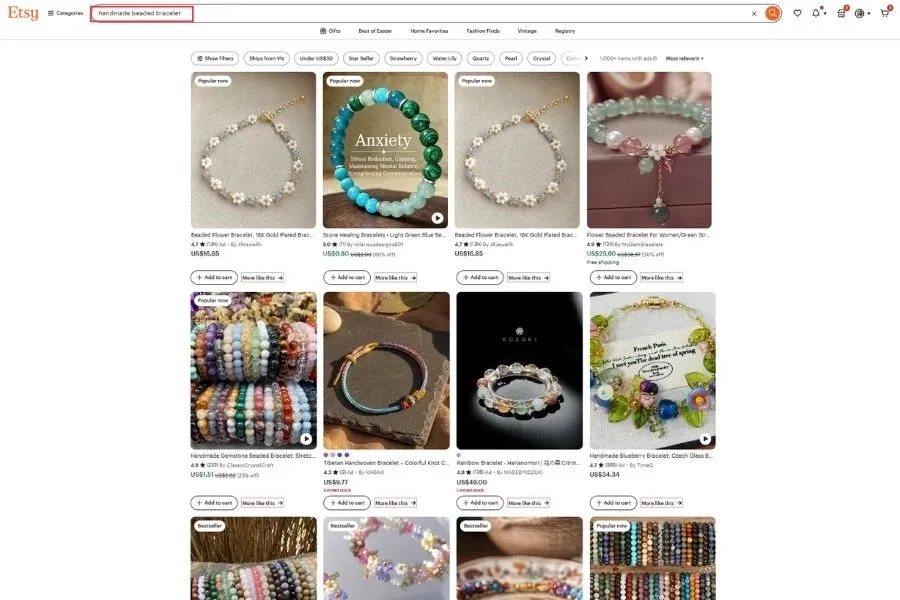
The search process of Etsy usually follows 3 main steps:
Step 1: Buyer Searches a Keyword
Everything starts when a buyer types a keyword into the search bar.
For example: “funny cat mug.”
At this moment, Etsy tries to understand the buyer’s intent and find products that match the search phrase.
Step 2: Etsy Finds Matching Listings
Next, Etsy scans its marketplace to find listings that contain relevant keywords. The algorithm looks at several important parts of each listing, including titles, tags, categories, and attributes.
Listings that closely match the search terms are selected and moved to the next stage.
Step 3: Etsy Ranks the Listings
After identifying relevant products, Etsy ranks them using several ranking factors. Some of the most important ones include:
- Relevance – how closely the listing matches the keyword
- Shop quality – reviews, ratings, and customer service
- Customer behavior – clicks, favorites, and purchases
- Logistics and value – shipping speed, pricing, and overall value for buyers
Listings that perform well in these areas are more likely to appear higher in Etsy search results.
Top Ranking Factors in the Etsy Algorithm (2026)
To fully understand the Etsy algorithm explained for sellers, it’s important to know the key ranking factors that influence how listings appear in search results. Etsy evaluates multiple signals to determine which products are most relevant and valuable to buyers.
1. Keyword Relevance
Keyword relevance is one of the most important ranking factors. Etsy checks whether your listing contains keywords that match what buyers are searching for.
Keywords should appear in:
- Title
- Tags
- Description
- Attributes
➨ Using long-tail keywords can be especially helpful because they often have less competition and match buyer intent more accurately.
2. Listing Quality Score
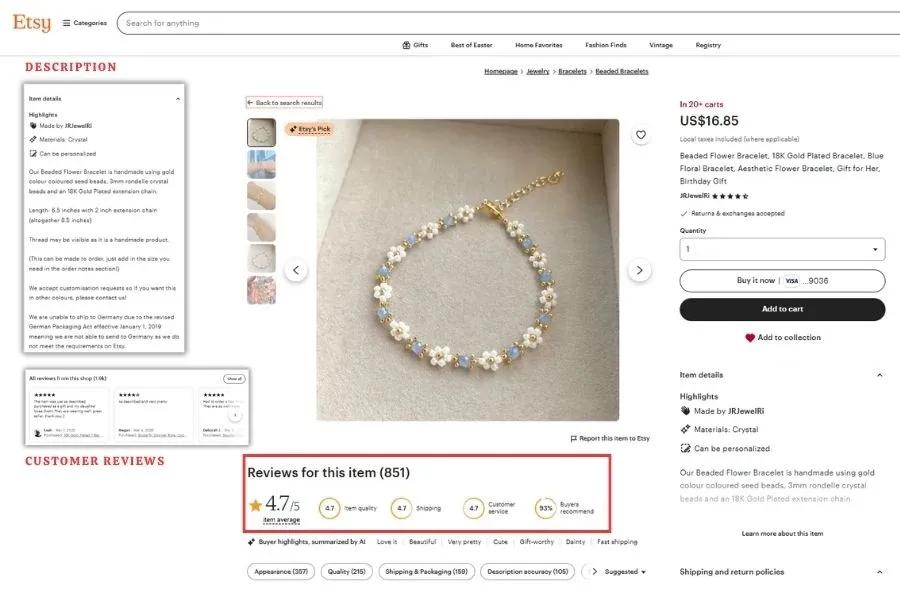
Etsy tracks how buyers interact with your listing. These interactions help the algorithm determine whether your product is attractive to customers.
Etsy mainly measures:
- Clicks
- Favorites
- Purchases
To improve your listing quality score, it’s important to create high-quality listings from the start. This includes:
- Using clear and catchy product images that catch buyers’ attention
- Writing detailed product descriptions that explain features, materials, and benefits
- Optimizing your listing with strong Etsy SEO, including relevant keywords in titles, tags, and descriptions
➨ When your listing looks professional and is easy for buyers to understand, it will have a good conversion rate on Etsy. It means a greater chance of getting more clicks, more purchases, and a higher ranking in Etsy search results.
🧾Valuable read: 5 Listing Optimization Mistakes on Etsy: What Top Sellers Avoid
3. Customer Experience Score
Etsy also evaluates the overall quality of your shop. Stores that provide a good customer experience are more likely to rank higher.
Factors Etsy considers include:
- Review ratings
- Shipping speed
- Cases or disputes
- Communication with buyers
➨ Shops with strong customer satisfaction signals usually receive better visibility.
New sellers must know: How to Remove a Review on Etsy: A 2026 Guide
4. Recency (Listing Freshness)
Newly created or recently updated listings may receive a temporary visibility boost in search results.
Some sellers take advantage of this by:
- Renewing listings
- Updating titles or tags
- Making small listing improvements
➨ These updates can help Etsy re-evaluate the listing and potentially improve its ranking.
5. Sales History
Listings that have sold well in the past often maintain stronger positions in search results. Previous sales indicate that customers trust and want the product.
As a result, listings with a good sales history are more likely to:
- Maintain stable rankings
- Continue receiving visibility from the Etsy algorithm
How Top Sellers Optimize for the Etsy Algorithm

Successful shop owners also apply strong Etsy SEO strategies to improve visibility and attract more buyers.
Must read: How to Get "Etsy's Pick" and "Bestseller" Badges (Complete Seller Guide) 💡
Many experienced sellers follow a few consistent practices:
- Research trending keywords to understand what buyers are searching for
- Upload new listings regularly to keep their shop active
- Test multiple designs to discover which products perform best
They also focus on strategic product planning, such as:
- Niche targeting to reduce competition
- Creating product variations to reach different audiences
- Launching products that match seasonal POD trends throughout the year
In addition, many sellers use tools like DodgePrint to simplify their workflow and improve their Etsy SEO process. DodgePrint helps sellers:
- Manage multiple Etsy stores from one dashboard
- Generate AI-powered titles, tags, and descriptions optimized for Etsy SEO
- Create POD product mockups quickly for new listings
- Bulk publish listings to save time
- Track store performance and analytics
By automating repetitive tasks, sellers can spend more time on important activities like product research, marketing, and scaling their Etsy business.
✅DodgePrint is free to join. So, don’t hesitate to connect your online stores with DodgePrint right now!
FAQs About the Etsy Algorithm Explained for Sellers
How Can New Listings Gain Traction On Etsy Quickly?
New listings can gain traction by generating early engagement signals. Etsy’s search algorithm pays attention to how buyers interact with listings shortly after they are published.
To increase early performance, sellers should focus on:
- Attractive and clear product images
- Competitive Etsy shipping and pricing
- Strong keyword optimization in titles and tags
When buyers click, favorite, or purchase a listing, Etsy interprets this as a positive signal and may rank the listing higher in search results.
Does Changing Your Etsy Shop Name Affect Seo Rankings?
Yes, changing your Etsy shop name can affect your SEO slightly. Etsy allows you to update your shop name through your Shop Manager settings. However, it’s best to do this only when necessary, such as during a rebrand.
When your shop name changes, search engines like Google may take some time to reindex the new URL. During this transition, your visibility in Google search results may temporarily fluctuate.
Does Etsy Search Consider Product Descriptions For Ranking?
Yes, Etsy’s search system can now analyze product descriptions to understand the context of a listing better. While titles and tags remain the most important factors for keyword matching, descriptions help provide additional information about the product.
Thus, you should include relevant keywords naturally in the first paragraph of your description. This can improve the overall relevance of your product and potentially increase its visibility in search results.
Final Thoughts
Remember that success on Etsy rarely happens overnight. Understanding the Etsy algorithm explained for sellers is essential if you want your listings to appear higher in search results. Consistently uploading new products, testing different designs, and improving customer experience can gradually improve your ranking.