Many Etsy sellers, especially new ones, face unexpected costs simply because they don’t fully understand tariffs. These charges can quietly eat into your profit.
If you're not sure about how those tariffs impact your POD store, you're in the right place.
We'll learn together about “What is a tariff?”, how they affect your business, and some valuable strategies. As a result, you can run your business more effectively.
What Is a Tariff?
A tariff is a tax or fee that a country’s government places on imported goods. This helps raise revenue and protect local businesses.
While Etsy itself doesn’t collect these fees, you (or your customers) might need to pay them depending on the country’s import rules.
Knowing how tariffs work helps you set clear expectations and price your items more accurately.
❗Important Note:
Not every order is subject to tariffs. If you’re using a print-on-demand (POD) service that fulfills orders within the same country as your buyer, no import tariffs apply.
🔔 Key Takeaways:
- New global tariff: Starting August 7, 2025, all packages shipped to the U.S. will be subject to import tariffs (at least 10%).
- Higher China tariffs: Imports from China now face a 145% tariff, which remains active and was not paused.
- Tariffs on Canada & Mexico: Goods from Canada are charged a 35% tariff (increase from 25%); in Mexico, the number is 25%.
- Suspend the de minimis exemption: From August 29, 2025, suspend the de minimis exemption for all low-value packages (under $800) shipped to the U.S.
In the next part, we will learn about what is tariff policies of DDP and DAP.
2 Ways to Handle Tariffs
We'll focus on 2 methods sellers can use to handle tariffs (DDP & DAP). They will be paid depending on the shipping method that sellers choose.
Delivered Duty Paid (DDP)
With DDP, the seller pays all tariffs and import fees in advance. These costs are included in the total amount the buyers must pay at checkout.
The advantage is that the package can clear customs easily. The buyer won’t face any unexpected charges when their order arrives.
Delivered At Place (DAP)
In contrast, the buyer is responsible for paying tariffs when the package reaches their country with DAP.
🚩 Note: DAP replaced DDU (Delivered Duty Unpaid) as an official Incoterm in 2010.
The shipping carrier (like USPS, FedEx, or DHL) will usually contact the buyer to collect these charges before delivery can be completed.
DDU can lower upfront costs. However, it often leads to confusion or delayed deliveries if buyers aren’t aware of the extra fees.
Which Is the Better Shipping Option: DDP or DAP?
👉 We strongly recommend using a Delivered Duty Paid (DDP) shipping option. 👈
This means sellers prepay all tariffs, duties, and taxes when purchasing your shipping label.
⏩ By shipping with DDP, you can display tariff-inclusive prices on your Etsy listings. This prevents situations where customers refuse to pay unexpected import fees.
It’s a simple way to ensure your buyers enjoy a seamless, stress-free shopping experience.
About DDU or DAP
With DDU or DAP, the buyer is responsible for paying tariffs and other fees when their package arrives, or before customs releases it.
⏩This often leads to confusion or even to deliveries being refused when customers aren’t prepared for extra charges.
Because of these issues, Etsy does not recommend using DDU or DAP for shipments to the U.S. Many postal carriers have suspended DDU services due to new import regulations.
How Will Etsy Sellers Be Affected?
Rising tariffs can impact your business in some ways. Here’s what to keep an eye on:
- Higher costs for imported materials: Fabrics, jewelry components, packaging, and other supplies may become more expensive.
- Increased shipping & fulfillment costs: Tariffs can make international logistics pricier, especially for sellers relying on overseas manufacturers.
- Tighter competition in advertising: As costs rise, many sellers boost their ad budgets to maintain visibility. It can increase the average CPC rates.
Set Your Pricing Strategies
Once you understand “what is a tariff” and how they affect your costs, it’s time to adjust your pricing strategy. Here’s how to do it smartly and clearly:
✅Count tariffs into product prices
Online sellers should factor in tariffs when pricing their products to protect their profit margins. Ignoring these costs can quickly eat into your earnings.
This ensures that each sale remains profitable even as import fees fluctuate.
Useful Tip: ▶
Use this pricing formula: Final Price = Base Cost + Shipping + (Tariff %) + Etsy Fees + Desired Profit
Expert Tip: ▶
Learn more about 3 Ways To Upgrade Your Etsy Shipping Strategies here.
✅Create separate listings for the U.S
We recommend creating separate prices for U.S. listings. This helps you include tariff costs while keeping prices competitive in other regions.
✅Be transparent about the fees
Mention in your description that your price includes (or doesn't include) tariffs, duties, and fees. This builds trust and avoids confusion.
✅Communicating with buyers
Many U.S. buyers have never paid tariffs before. Let them know early if their order might include extra fees.
✅Utilize the de minimis exemption
Many countries have a de minimis rule. It allows low-value shipments (e.g., under $800 in the US) to enter duty-free. This can be beneficial for many POD businesses.
✅Offer bundle products to increase AOV
AOV stands for average order value. Instead of selling items individually, try offering them as themed bundles or matching sets. For example, a mug and coaster set, or a necklace with matching earrings.
Bundles encourage shoppers to spend more per transaction. This helps you offset tariff-related costs while giving buyers more value for their money.
✅Go to premium positioning
If your products are handcrafted, unique, or made from quality materials, communicate that clearly in your listings.
For example, highlight the story behind your craftsmanship and your design process that makes your work special.
By positioning your brand as premium, buyers are more willing to pay slightly higher prices. This helps balance out import taxes or higher shipping fees.
✅Offer local alternatives
If you have a local buyer base, consider emphasizing your “Made in [your country]” identity. Local customers tend to appreciate supporting homegrown businesses.
You’ll save them the extra wait times and fees that come with cross-border shipping.
Valuable Strategies to Protect Your Margin
To run your business effectively on Etsy, you need some strategies. Here’s how:
Source Locally If You Can

According to Etsy data, more than 90% of sellers already choose to source their materials domestically. Buying local means you can skip:
- Import tariffs & customs charges
- Long international shipping times
- Supply chain disruptions due to trade restrictions
By partnering with domestic suppliers, you keep your production steady, shorten fulfillment times, and protect your shop from future tariff hikes or global trade changes.
It’s a smart move that keeps both your costs and your stress lower.
🔷 Pro Tip:
When connecting your stores with DodgePrint, you can:
-
Connect with multiple fulfillment suppliers: DodgePrint integrates with many suppliers, like Printify, Merchize, Gearment, BurgerPrints, and more.
This gives Etsy sellers the flexibility to choose partners that best match their customer markets.
-
Automatically synced tracking between DodgePrint and your store: You can ensure your order information is accurate and save time.
Update Your Pricing
Make it a habit to review your pricing regularly. Stay updated on changing tariffs, customs duties, and taxes. Then, adjust your prices based on the landed cost to protect your profits.
Track Your Business Performance Regularly
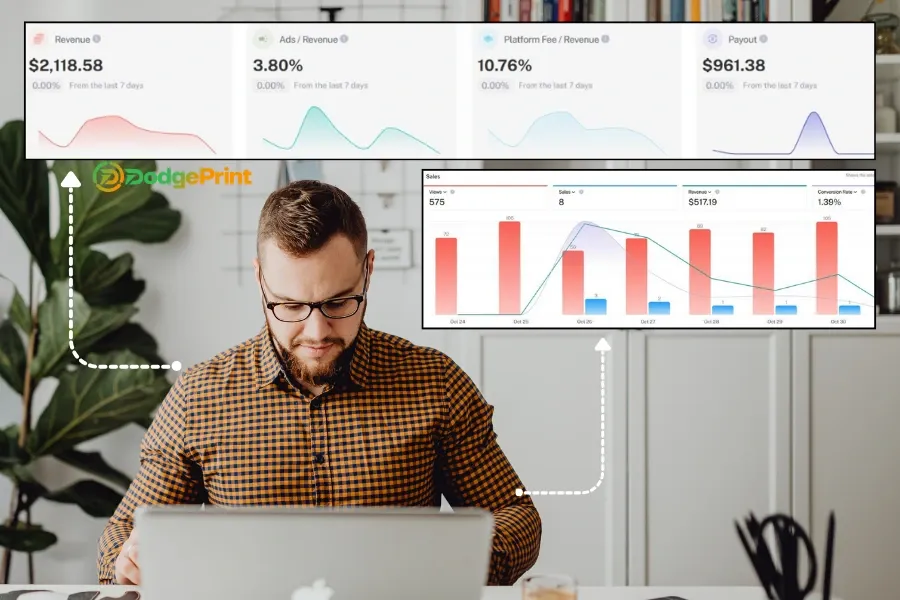
By tracking your shop’s performance regularly, you’ll quickly spot when your monthly margins start to dip. It's time for you to recalculate your pricing before it affects your bottom line.
Tools like DodgePrint will help you stay ahead. The platform gives you a complete overview of your shop’s financial health.
✅With DodgePrint, you can:
- Monitor your total revenue & sales & payout - not just on Etsy but across multiple platforms (Amazon, Shopify, TikTok Shop, & more)
- Track profit margins ➡ Identify which channels and products are bringing the money best
- Track share & save refunds, ad fees, platform fees, & VAT fees, etc.
- Calculate profits after Etsy fees with the free tool: Etsy Fee Calculator
✅Link your stores to DodgePrint and you will:
- Manage all your orders in one simple dashboard from all sales channels
- Process hundreds of orders with a few clicks
- Track your profits and costs in real-time with a glance
- No more spreadsheets or manual work
- Fulfill and ship the orders globally
FAQs about What Is Tariff Policies
Do I Have to Pay Tariffs on Etsy (like VAT)?
Etsy doesn’t charge tariffs directly. However, you might still pay them depending on how you source or ship your products.
If you import supplies, raw materials, or finished goods from abroad (especially from China or other countries under trade restrictions), U.S. Customs will apply import duties.
Can I Limit My Shop To Domestic Buyers Only?
Yes, you can choose where you ship your products. If you prefer, you can set your shop to sell only within your home country.
Do Tariffs Affect Digital Items On Etsy?
No. Tariffs only apply to physical goods that cross borders. Digital listings aren’t subject to tariffs, though other types of taxes may still apply.
Closing Thoughts
Global trade changes can feel unpredictable. So, understanding "What is a tariff" is very important to keep sellers staying proactive.
By staying informed, adjusting your prices when needed, and choosing the right shipping methods like DDP, you can protect your profits.
And remember, tools like DodgePrint can make it easier to track costs, manage orders, and monitor your revenue—all in one dashboard.