Every day, millions of products compete for attention on Amazon. And over 300 million active customers are searching for great products. Simply “listing” a product is no longer enough.
That’s why learning how to optimize Amazon listings is one of the most powerful skills for any seller. Let's learn some simple steps to improve visibility and convert more visitors into buyers.
Why Do You Need to Optimize Amazon Listings?
Optimizing your Amazon listings helps you win in two critical areas: search ranking & buyer trust.
First, Amazon’s algorithm looks at how relevant and successful your listing is. If your title, keywords, and description match what shoppers search for, Amazon is more likely to show your product higher in results.
Second, shoppers make decisions fast. Clear images, strong bullet points, and helpful descriptions reduce doubt and increase confidence. A well-optimized listing answers questions before buyers even ask.
In short, optimization helps you:
- Get more visibility in search results
- Increase click-through rates
- Convert more visitors into real sales
- Build a more professional, trustworthy brand
New sellers should learn: How to Sell POD on Amazon in 2026 (Beginner Guide) 🍀
Easy Guide on How to Optimize Amazon Listings for 2026
Optimizing your Amazon listing isn't as complicated as you think. We'll start with keywords to learn what buyers actually search for and care about.
1. Do Keyword Research
Keyword research is about understanding how customers search. The goal is to match your listing with the exact words buyers type into Amazon.
Here are simple ways to find strong keywords:
🟧Use Amazon’s search bar: Type a few product-related words and look at the auto-suggestions. These are real searches from real shoppers that you should include in your listings.
🟧Study top competitors: Open high-ranking listings in your niche. Look for repeated phrases in their titles, bullet points, and descriptions. These often signal high-value keywords.
🟧Use Amazon SEO tools: Tools like Product Opportunity Explorer help you spot popular search terms, demand levels, and trends.
🟧Mix short-tail & long-tail keywords: Short-tail keywords (like “running shoes”) attract high traffic but come with strong competition. Long-tail keywords (like “men’s waterproof trail running shoes”) bring fewer visitors but often convert better.
Quick Tip:
Keywords change with the trends. Learn this so you won’t fall behind: POD Trends 2026: What’s Next for Print-on-Demand Sellers?
2. Create SEO Product Titles
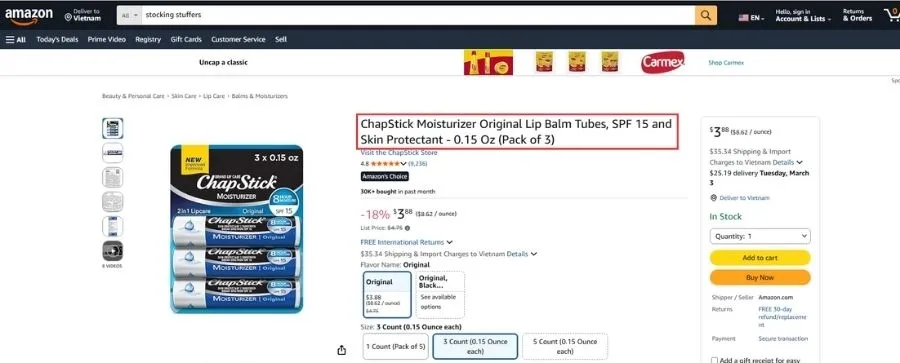
Your product title is often the first thing shoppers see. Thus, it needs to be clear, helpful, and include your main keyword. Remember to keep it sounding natural to the buyers.
Here’s how to build a strong Amazon title:
🟩Start with the product type: Let shoppers instantly know what you’re selling (e.g., “Wireless Headphones,” “Ceramic Coffee Mug”).
🟩Add your brand name: This builds trust and helps with brand recognition.
🟩Include key details: Use simple descriptors like color, size, material, or quantity if they matter to the buyer.
Example:
“Good Sleep Collection Pillowcases, Yellow, Set of 2, Cotton” works better than just “Yellow Pillowcases” because it gives more useful information at a glance.
🟩Keep it short and clean: Amazon allows up to 200 characters in the title. Focus on the most important keywords here. You can place extra ones in your bullet points and product description later.
Expert Tip:
You need tools to run your Amazon business easily. Then, check out this article: 15 Best Tools For Selling on Amazon Every Successful Seller Uses
3. Write SEO & Informative Product Descriptions
Your product description is where you can explain what your product is, why it’s useful, and how it fits the buyer’s needs. Primary and secondary keywords should be included here.
Focus on clear, helpful details such as:
- Materials (what it’s made from)
- Colors & variations
- Sizes & dimensions
- What’s included in the package
- Care or usage instructions
- Warranty or guarantees
👉Remember to avoid keyword stuffing.👈
Repeating the same phrase over and over can make your listing hard to read and even hurt your ranking. Use natural variations and related terms to keep the text smooth, informative, and easy to scan.
Pro Tip:
DodgePrint’s AI Optimization can do the heavy lifting for you. It helps generate keyword-rich titles, smart tags, and clear product content in minutes. Then you can bulk-publish listings across multiple platforms, such as Amazon, Etsy, and TikTok.
4. Highlight Important Details with Bullet Points
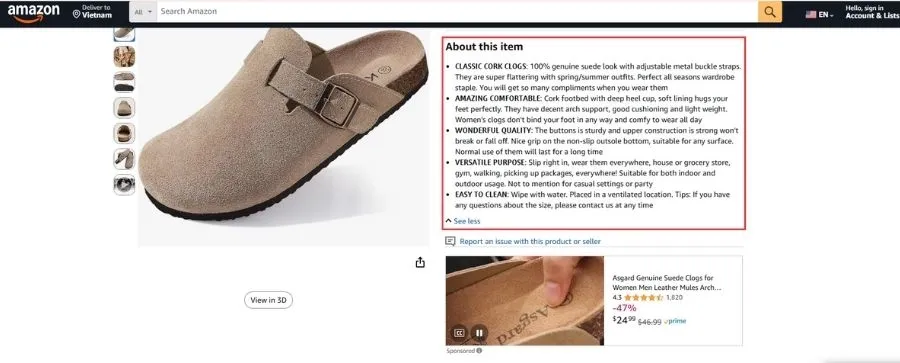
Use bullet points to show the most important features at a glance. Focus on what buyers care about most, like design, size, material, and special uses.
- Keep each bullet short and clear
- Start with a bold keyword or 1–2 word label
- Add a quick explanation (under 100 characters)
- Use simple phrases, not full sentences
⏩Well-written bullets make your listing easier to scan and help shoppers decide faster.
5. Use High-quality Product Images
You can't lack images in the selling. Clear and professional photos can be the difference between a click and a scroll.
Here are some practical tips to level up your product images:
🟪Clean main image: Use a pure white background and show the product clearly, centered, and well-lit.
🟪Show multiple angles: Add side, back, and close-up shots so buyers fully understand what they're getting.
🟪Highlight scale: Include a photo showing the size in real life, such as the product next to a hand, a model, or an everyday object.
🟪Use lifestyle images: Show the product in use. This helps shoppers imagine owning it, not just buying it.
🟪Zoom in on details: Fabric texture, stitching, print quality, or packaging can reassure customers about quality.
🟪Stay consistent: Use the same lighting and style across all listings to make your brand look more professional.
Tip from Pro sellers💡
With DodgePrint’s Smart Catalog, you can store all your product images, mockups, and designs in one organized place. Instead of hunting through folders, you can quickly find, reuse, and update visuals across Amazon, Etsy, and TikTok. ➟ This will save you hours as your store grows.
6. Keep Prices Competitive
Pricing can make or break your Amazon listing. Even a small difference can push buyers toward a competitor, especially in crowded niches.
Here’s how to stay competitive without killing your profit:
🟨Research your market: Check top-ranking competitors and note their price range, shipping fees, and bundle offers.
🟨Know your true costs: Factor in production, fulfillment, Amazon fees, ads, and returns. ➟ Thus, you won’t underprice your products by mistake.
🟨Test smartly: Try small price changes and watch how they affect clicks and conversions.
🟨Add value, not just discounts: Better images, faster shipping (use FBA), or bonus items can justify a slightly higher price.
🟨Plan for promos: Use limited-time deals to boost visibility without permanently lowering your base price.
Smart Tip 📊
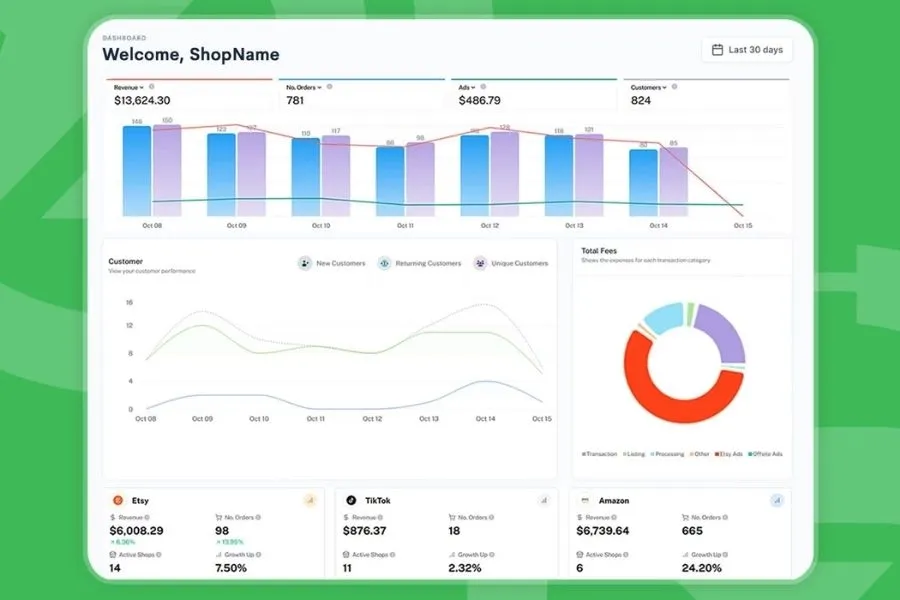
With DodgePrint’s Analytics Dashboard, you can track sales, costs, and real profit across all channels in one view. See which products perform best, spot low-margin listings, & adjust your pricing strategy based on data.
🚩Connect your Amazon store to DodgePrint for free now! 🚩
Final Thoughts
Mastering How to Optimize Amazon Listings means thinking like both a seller and a shopper. When your listings answer real questions, look professional, and stay competitive on price, conversions follow naturally. With an automated tool like DodgePrint, you turn your store into a repeatable, scalable sales engine.