Learning how to find suppliers for dropshipping is one of the first real challenges every new seller faces. You can build a great-looking store. You can run ads. But if your supplier is slow, unreliable, or overpriced, your business will struggle before it even starts.
That’s why choosing the right partner is just as important as choosing the right product. In this guide, you’ll learn what dropshipping really is and how to find suppliers you can trust.
What Is Dropshipping?
Dropshipping is a business model where you sell products without keeping them in stock.
Instead of buying inventory upfront, you list products in your online store. When a customer places an order, you send that order to your supplier. The supplier then packs and ships the product directly to your customer.
Here’s how it works in simple steps:
- You create an online store and list products
- A customer buys from your store
- You forward the order to your supplier
- The supplier ships the item to the customer
This model is popular because it’s low risk. You don’t need a warehouse. You don’t need to buy products in bulk. You only pay for items after you make a sale.
➽ That makes dropshipping a great option for beginners who want to start an online business with a limited budget and less upfront investment.
How to Find Suppliers for Dropshipping: 5 Smart Tips for Beginners

The right supplier can shape your shipping speed, product quality, and customer trust. A good supplier makes your business easier to run. A bad one creates refunds, complaints, and stress.
Below are the key things every new seller should check before making a decision.
1. Check Where the Supplier Ships From
Shipping location matters more than most beginners think.
If you sell to local customers, choose a supplier with a nearby warehouse. This helps reduce delivery time and shipping costs. Faster shipping often leads to better reviews and more repeat buyers.
If you sell worldwide, look for a supplier with warehouses in different regions. This helps you reach customers in the US, Europe, and Asia without long delays.
2. Look for Low or No Minimum Orders
Some suppliers require you to buy in bulk. This can be risky for beginners.
A high minimum order means you must spend money before you even make a sale. Try to find suppliers that let you order one item at a time. This keeps your costs low and your risk small while you test products.
3. Make Sure They Offer Enough Products
Product variety helps your store grow. Verify if the supplier offers a range of items in your niche.
This could be clothing, home goods, or accessories. A wider catalog lets you expand without changing suppliers later. Also, avoid selling copies of famous brand products. This can lead to legal trouble and store bans.
4. Confirm Store Integrations
Good suppliers should connect with your online store.
Look for tools that work with platforms like Shopify, Etsy, or Amazon. This lets orders sync automatically. You won’t need to place every order by hand. This saves time and reduces mistakes as your store grows.
5. Watch Out for Fake Suppliers
Not every supplier is real or reliable.
Check reviews on Google and forums. Look for clear contact details and real customer support. A real business should offer email, chat, or phone help.
If a site promises “easy money” or “instant success,” be careful. Trust suppliers that display genuine policies, transparent pricing, and accurate shipping times.
Top 8 Best Dropshipping Suppliers
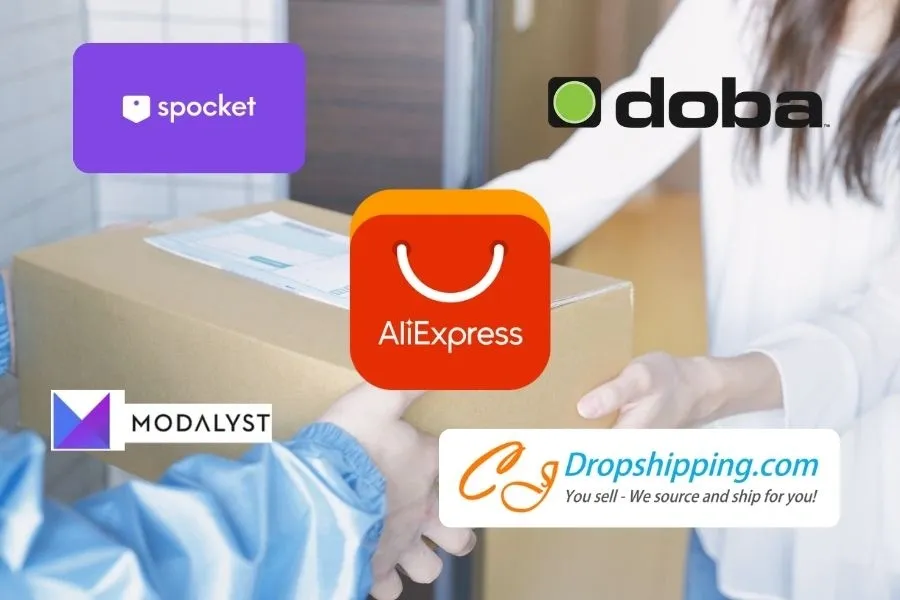
Below are 8 of the most popular dropshipping suppliers. Each comes with a unique strength for different types of sellers.
1. AliExpress
It is known for its massive product selection, with millions of items across almost every category you can imagine. It offers low product cost. You will have more room to test and price competitively.
2. Spocket
Spocket focuses on fast shipping by connecting sellers with US and EU-based suppliers.
3. DSers
DSers is an automation platform built for AliExpress dropshipping. It helps you import products, place bulk orders, and manage multiple stores in one dashboard.
4. Modalyst
Modalyst specializes in trendy and branded products, including fashion and eco-friendly items.
5. Doba
Doba is a great platform that offers many products across almost any category. It frequently offers discounts on wholesale prices for bulk orders and seasonal deals.
6. Inventory Source
Inventory Source focuses on automation and inventory syncing. It connects your store directly to suppliers and updates stock levels in real time.
7. CJDropshipping
CJDropshipping offers product sourcing, custom branding, and global fulfillment. It also provides product videos and photography for marketing.
8. Printify
Printify is a print-on-demand dropshipping platform with over 1,000 customizable products.
What Do Successful Sellers Do?
Many top sellers don’t stop at dropshipping. They add Print-on-Demand (POD) to build stronger brands, higher margins, and long-term stability.
Dropshipping vs POD — What’s the Real Difference?
🛒 Dropshipping
- Sell ready-made products from suppliers
- Fast to start, low setup cost
- High competition, little brand control
- Same products as many other stores
🎨 Print-on-Demand (POD)
- Sell custom-designed products (apparel, mugs, wall art, accessories)
- Strong branding and repeat customers
- Higher perceived value and better margins
- Unique designs that competitors can’t copy easily
Learn more: Dropshipping vs POD: Which Is Better? (2026 Edition)
Why POD Helps Sellers Grow Faster
Build a Real Brand – Your designs make your store memorable, not just another product page.
Increase Profit Margins – Custom products can sell at premium prices.
Create Repeat Buyers – Customers come back for your style, not just the item.
Lower Risk, No Inventory – Products are made only after a sale, just like dropshipping.
Many successful sellers use dropshipping for volume and POD for brand power. This is a smart mix that drives both short-term sales and long-term growth.
Start Your Online Business with DodgePrint
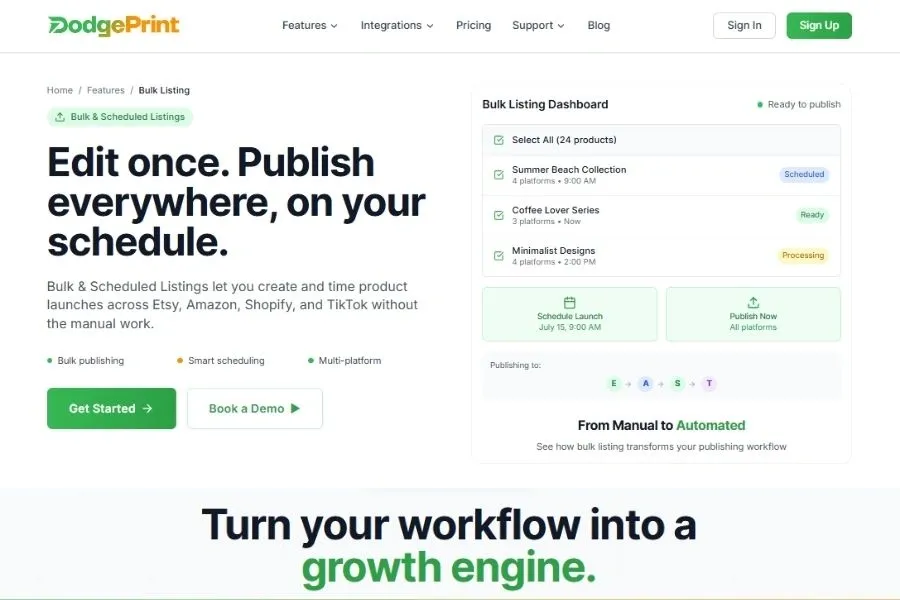
Here’s how sellers use DodgePrint to move from idea to sales without getting lost in tools and tabs:
1️⃣ Organize your products in one place
Start by adding your designs and mockups to the Smart Catalog. Think of it as your digital product library. Everything is tagged, searchable, and easy to find, so you always know what’s ready to sell and what’s coming next.
2️⃣ Create listings once, sell everywhere
Use Bulk & Scheduled Listings to publish your products to Etsy, Amazon, Shopify, and TikTok at the same time. You edit one listing, choose when it goes live, and DodgePrint handles the rest.
3️⃣ Track every order from one dashboard
When sales come in, Order Management shows all your orders on one screen. You can see status, fulfillment, and updates in real time—no more switching between platforms.
4️⃣ Learn what’s actually working
The Analytics Dashboard helps you spot your best products, top stores, and real costs. You can grow based on data, not guesswork.
5️⃣ Let AI help you sell smarter
With AI Optimization, DodgePrint helps improve titles, tags, pricing, and content so your listings stay competitive while you focus on marketing and ideas.
From listing to fulfillment, DodgePrint keeps everything connected in one simple workflow. So, even beginners can start, automate, and scale with confidence.
👉Connect DodgePrint with Your Favorite Sales Channels today!👈
Conclusion - How to Find Suppliers for Dropshipping
Mastering how to find suppliers for dropshipping gives you more than just products; it gives you control over quality, speed, and customer trust. The better your suppliers, the stronger your brand becomes. Keep exploring and use DodgePrint to work with multiple suppliers effectively.