E-commerce is booming, competition is fiercer than ever, and customers expect lightning-fast experiences. The truth is, many online sellers don't fail because their products are bad. They fail because their operations can't keep up.
So, if you're struggling with your eCommerce business, the problem may not be because of you. It's your toolkit!
That's where the e-commerce tools come in. These platforms act like your silent business partners, not just help you sell, but also scale.
Here are the 25 top e-commerce seller tools that will redefine your success in 2026. Let's get started! 🚀
What Are E-Commerce Tools?
E-commerce tools are platforms, apps, or plug-ins designed to help sellers manage their online businesses effectively. They are like your digital assistants, taking over repetitive, time-consuming tasks that slow you down.
Instead of juggling many platforms, e-commerce tools merge everything into a smart ecosystem.
Popular Types of E-Commerce Tools
E-commerce businesses rely on different tools to run smoothly and scale effectively. Each tool focuses on a core part of online selling:
♦️E-commerce platforms – Manage products, checkout, and the entire online store
♦️Marketing tools – Build campaigns to engage and retain customers
♦️Payment gateways – Enable fast, secure online transactions
♦️Analytics tools – Provide insights for smarter business decisions
♦️Social media management tools – Schedule posts and engage audiences across platforms
♦️SEO tools – Improve rankings and increase organic traffic
♦️Content-creating tools - Help you to create content like images and videos with ease
Why Are E-Commerce Seller Tools Important?

E-Commerce seller tools transform complex, time-consuming tasks into streamlined processes. They will help your businesses grow faster and smarter. Here's why they matter:
- Reach More Customers Worldwide: You can sell to customers across different countries, marketplaces, and platforms - all from one place.
- Sell 24/7 Without Lifting a Finger: Your online store is always open. E-commerce tools automate key functions, enabling customers to browse, buy, and track orders at any time.
- Streamline Operations: Seller tools eliminate repetitive tasks and reduce errors. This frees up time so you can focus on growth, not management.
- Deliver a Better Customer Experience: Easy product browsing, smooth checkout, and fast support turn one-time shoppers into loyal fans.
- Make Smart, Data-Driven Decisions: Built-in analytics track what sells, how shoppers behave, and where revenue comes from. These insights help you improve marketing, adjust pricing, and avoid costly mistakes.
- Scale Without Stress: E-Commerce tools help you grow without hiring more staff or doing more manual work.
Top E-Commerce Seller Tools for 2026
To save your time, we've handpicked the top E-commerce seller tools that will help you grow your online business with confidence.
Let's begin with E-commerce platforms!
E-commerce Platforms
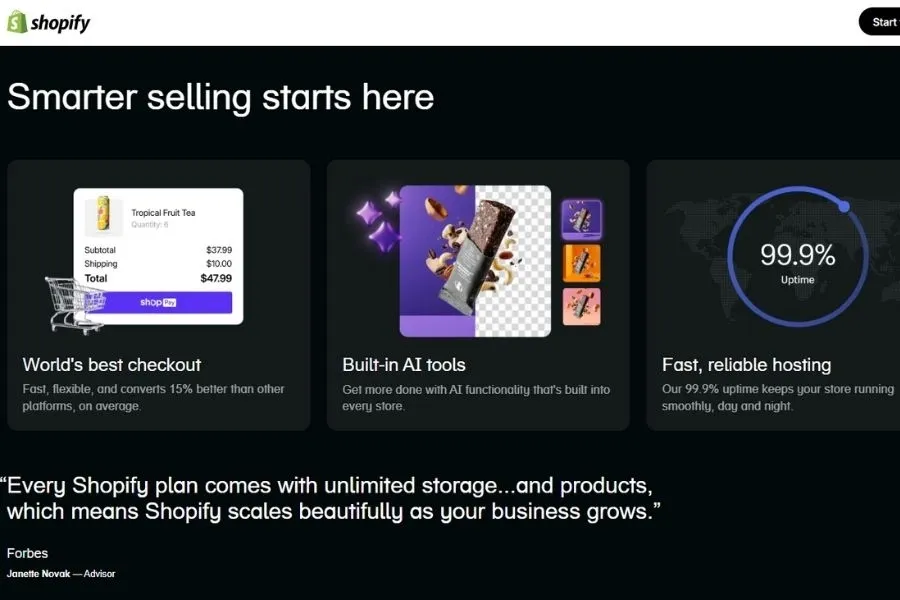
To build an online store, you need a platform. The right one will help simplify your daily workflow as well as your long-term growth strategies.
🔔 1. Shopify
Shopify is one of the most powerful and user-friendly e-commerce platforms available today. It is designed to help business owners launch and grow online stores without technical headaches.
It enables sellers to build a customizable storefront, manage inventory, accept payments, and sell across multiple channels.
Thanks to its robust ecosystem, Shopify goes beyond basic store creation. Shopify has over 8,000 apps in the store. Sellers can extend functionality for marketing, checkout optimization, fulfillment, and customer engagement. Shopify delivers the flexibility and performance modern sellers need.
🔔 2. Etsy
Etsy is a unique e-commerce platform that almost all sellers know. It is designed for creative entrepreneurs, artisans, and sellers of handcrafted goods, vintage items, and digital products. Sellers can open a shop within a thriving marketplace with millions of active buyers.
Etsy eliminates many of the technical barriers found in traditional e-commerce platforms. You can easily list products and reach a global audience without learning complex web design.
Learn more: How to Advertise on Etsy & Get More Sales Fast
🔔 3. WooCommerce
WooCommerce is a powerful, open-source e-commerce platform built specifically for WordPress users. Powering millions of websites worldwide, WooCommerce lets you turn any WordPress site into a fully functioning online store without technical hassle.
Store owners can customize every part of their shop, from product pages to checkout flows, using themes, plugins, and add-ons.
🔔 4. BigCommerce
With BigCommerce, sellers can launch a fully functional e-commerce website from a single dashboard. BigCommerce includes powerful tools and supports serious ecommerce ambitions.
The strength of BigCommerce extends into marketing and analytics. Its multichannel engine connects directly to various marketplaces and social platforms.
🔔 5. Wix
Wix is ranked among today's Top E-commerce seller tools. Wix empowers users to create professional storefronts through its intuitive drag-and-drop interface. The huge library of over 500 customizable templates will impress any user.
What sets Wix apart is its design flexibility and marketing automation ecosystem. Its AI-powered site builder can generate a fully personalized storefront in minutes. Thus, Wix is ideal for both beginners and experienced users.
Marketing Tools

Marketing tools play a crucial role in helping e-commerce businesses attract and convert customers. Below are 3 essential marketing tools widely used by online sellers.
⭕ 6. Mailchimp
Mailchimp is one of the most popular email marketing platforms for e-commerce businesses. It helps sellers design, automate, and track email campaigns without any technical skills.
What makes Mailchimp powerful is its integration with major e-commerce platforms like Shopify. It automatically syncs customer and purchase data, enabling personalized product recommendations, abandoned cart reminders, and targeted promotions.
⭕ 7. Ahrefs
Ahrefs is a leading SEO and competitor analysis tool. This e-commerce tool helps sellers improve search rankings and drive organic traffic.
Sellers use Ahrefs to research keywords, analyze backlinks, audit site performance, and uncover competitor strategies. With Ahrefs, you can optimize your stores, increase visibility, and outperform competitors.
⭕ 8. Buffer
Buffer is a social media scheduling tool. It helps online stores maintain a consistent presence on platforms like Facebook, Instagram, and TikTok.
With Buffer, sellers can plan and schedule posts in advance. Besides, Buffer can analyze engagement data and manage many channels. Buffer helps to boost your brand visibility and customer engagement.
Payment Gateways
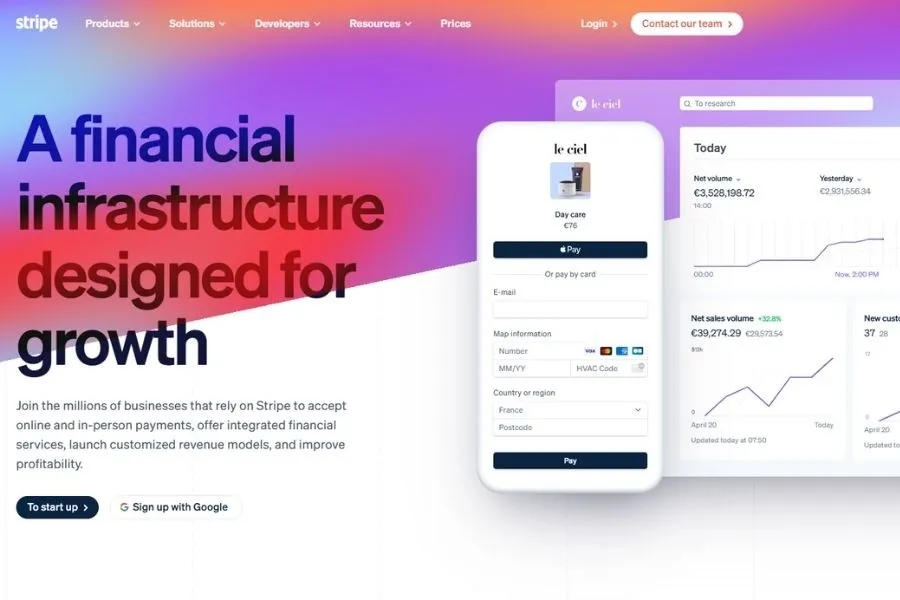
A smooth checkout experience can have a major impact on conversion rates. They help businesses reduce shopping cart abandonment and increase customer trust.
✳️ 9. PayPal
PayPal is a trusted and widely recognized payment solution that boosts customer confidence. It allows shoppers to pay using PayPal balances, bank accounts, or cards, making checkout fast and familiar.
✳️ 10. Stripe
Stripe is one of the most flexible payment gateways. This tool offers global payment support and seamless integration with most e-commerce platforms.
✳️ 11. Square
Square is popular among small and local businesses. It provides both online and offline payment options. This makes it ideal for sellers who operate retail stores and e-commerce simultaneously.
✳️ 12. Authorize
Authorize supports secure card payments and recurring billing. It's known for its fraud prevention features and reliability, especially for growing online stores.
If you're selling from outside the US, choosing the right gateway matters even more. Here's a detailed comparison of the best payment gateways for international sellers with pricing, features, and global support.
Analytics Tools
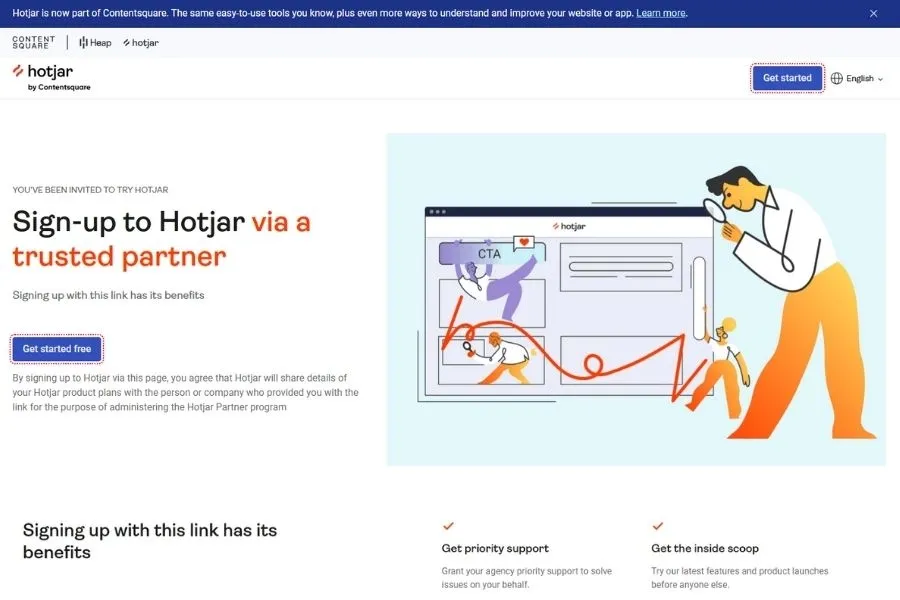
These tools provide data-driven insights into traffic, sales, and user experience. It is essential for smart decision-making and business growth.
✔️ 13. Google Analytics
Google Analytics provides website traffic and user behavior insights. It helps ecommerce sellers identify where customers come from, what pages they visit, and how they engage with your products.
✔️ 14. Optimizely
Optimizely is an A/B testing and experimentation platform. This lets you see which performs best and improve conversion rates.
✔️ 15. Hotjar
Hotjar provides visual insights through heatmaps, session recordings, and user feedback tools. It shows how visitors interact with your site -where they click, scroll, or drop off. From that, you can fix friction points and improve user experience.
Social Media Management Tools

These top e-commerce seller tools streamline scheduling, performance tracking, and brand communication. They are essential for growth-focused online businesses.
🔆16. Hootsuite
Hootsuite lets users schedule posts, track brand mentions, and manage multiple accounts from a single dashboard. It's ideal for e-commerce sellers who want to monitor activity across platforms in real time.
🔆17. Buffer
Buffer helps streamline content planning and publishing. Sellers can schedule posts, review performance analytics, and optimize content based on audience engagement trends.
🔆18. Later
Later focuses on visual content, making it perfect for brands prioritizing Instagram, TikTok, and Pinterest. It offers drag-and-drop scheduling, hashtag tools, and strong visual planning features.
🔆19. SocialBee
SocialBee simplifies content categorization and post recycling. This will ensure brands always have something engaging to publish. It's a powerful tool for maintaining consistent posting schedules without manual effort.
SEO Tools
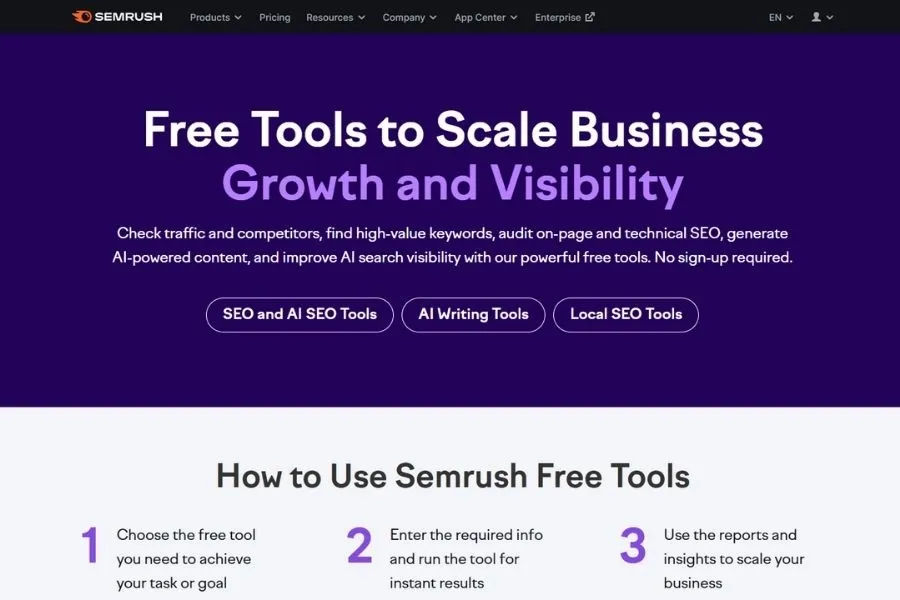
These SEO tools uncover keyword opportunities, optimize product pages, and track rankings - making them crucial for long-term, sustainable growth.
📍20. Ahrefs
Ahrefs is a comprehensive SEO suite. It is known for its powerful backlink analysis, keyword research, and competitor insights.
📍21. Semrush
Semrush is a powerful SEO tool and doesn't require a sign-up. With Semrush, you can check traffic, find high-value SEO keywords, and analyze competitors.
📍22. Moz
Moz simplifies SEO with user-friendly tools for keyword research and rank tracking. Moz can also help to optimize content, analyze competitors, and identify SERP opportunities.
📍23. SE Ranking
SE Ranking is an all-in-one SEO platform designed for marketers, agencies, and e-commerce teams. It offers over 35 tools that cover keyword research, competitor analysis, site audits, and rank tracking across multiple locations.
Content-Creating Tools

These tools help you produce visual assets such as images, videos, and other multimedia elements. Sellers can create professional-looking content without advanced design skills.
🟢 24. Canva
Canva is one of the most popular design tools that any seller should know. It offers a huge library of templates, fonts, stock photos, and design elements, perfect for both beginners and professionals.
🟢 25. Pippit (rebranded name for CapCut Commerce Pro)
Pippit is a useful tool for creating images and videos for your online shops. This is a feature-rich platform that allows you to make polished product videos, ad reels, and social media clips. With Pippit, your video content looks professional and is ready for monetization.
FAQs About E-Commerce Tools
What are e-commerce tools?
E-commerce tools are software platforms, apps, and plug-ins that help online sellers build, run, and scale their stores. They cover store building, marketing, payment processing, analytics, social media, SEO, and content creation. Most modern sellers use five to ten tools at once, integrated through their main e-commerce platform.
What are the best free e-commerce tools?
Several powerful e-commerce tools offer free plans. Google Analytics is free for tracking traffic and conversions. Canva has a free tier for design work. Mailchimp includes a free plan for up to 500 contacts. WooCommerce is free as a WordPress plugin. DodgePrint also offers a free plan forever for managing up to 3 shops, which replaces several paid tools.
What are the best checkout optimization tools in 2026?
Checkout optimization tools reduce cart abandonment and lift conversion rates. Shop Pay (built into Shopify) accelerates checkout for returning shoppers. Bolt provides a one-click checkout layer for non-Shopify stores. Klaviyo sends automated abandoned cart emails that recover lost sales. PayPal and Stripe also offer express checkout buttons that cut friction. For Shopify sellers, the Shopify App Store also lists dedicated checkout extensions you can install in minutes.
How many e-commerce tools should I use?
Most sellers need 5 to 8 tools to start: one e-commerce platform, one payment gateway, one email marketing tool, one analytics tool, and one design tool. Add SEO and social media tools as you grow. Avoid overlapping subscriptions, and consider all in one platforms like DodgePrint that consolidate multiple functions.
DodgePrint: One Platform to Replace Dozens of Tools
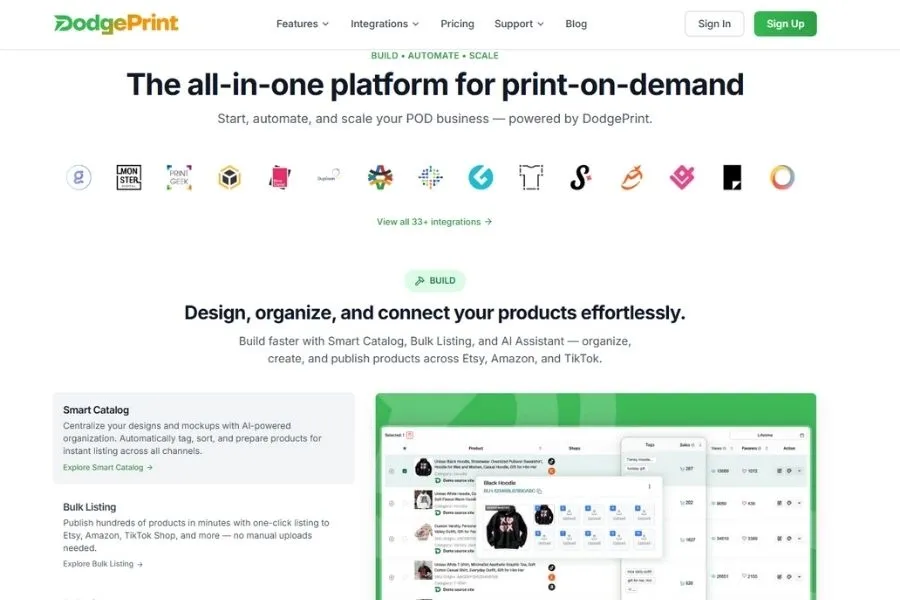
Running a print-on-demand business doesn't have to involve a bunch of software. DodgePrint is a POD management software that eliminates that chaos.
Instead of switching between top E-commerce seller tools, DodgePrint centralizes everything you need to launch, manage, and scale your eCommerce empire — all in one smart ecosystem.
Whether you're selling on Etsy, Shopify or others, DodgePrint syncs your products, updates listings, routes orders, analyzes performance, and even optimizes content using AI. That means less time managing tools and more time growing your revenue.
DodgePrint isn't just another software - it's your complete POD command center. 🚀
Successful story: How Sarah Miller Scaled Her Print-on-Demand Business with DodgePrint
👉 Why DodgePrint Is a Smarter Choice 👈
- Replace multiple tools and subscriptions with one platform
- Scale effortlessly across marketplaces without repetitive work
- Edit your listing once and publish it simultaneously across multiple sales channels
- Create images, mockups, and designs for your products
- Manage and fulfil orders from various providers from one place
- Gain an analysis of your business performance from one dashboard
- Use AI to increase efficiency, conversions, and profitability
- Integrate with Klaviyo to build your email marketing campaigns
If you're serious about POD, DodgePrint isn't optional. It's the competitive edge modern sellers need. 🎯
What more❓
DodgePrint offers a free plan forever for 3 shops max and access to many features. So, it's perfect for you to get started and see how DodgePrint does the magic.
▶️ Try DodgePrint for free today! ◀️

Final Thoughts
With so many top E-commerce seller tools available, e-commerce sellers need streamlined, powerful solutions that can reduce workload and boost sales.
If you want to build smarter, sell faster, and manage everything from one place, try DodgePrint. Start investing in the right tools today, and watch your business transform tomorrow.